
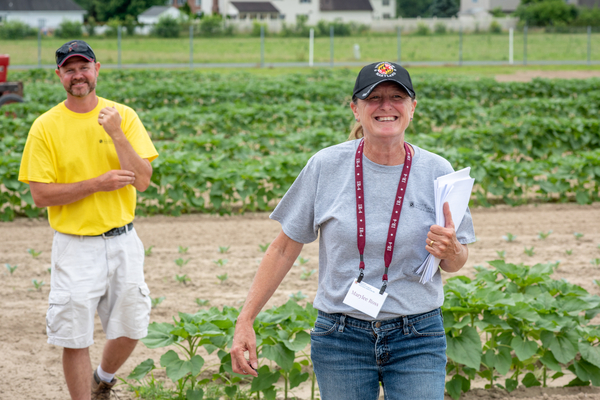
Marylee Ross leads a field day at the Lower Eastern Shore Research & Education Center.
Photo courtesy of the University of Maryland.
Marylee Ross, Regional Field Coordinator for IR-4’s Northeast Region, retired on June 1, 2026. Ross began working at the University of Maryland’s Lower Eastern Shore Research and Education Center (LESREC) in 1990 while earning her bachelor’s in biology and raising three children. Balancing work and family hand in hand, two of Ross’s children even worked alongside her at LESREC, collecting data for entomology research trials during their summer breaks from school.
Ross has led a meaningful career, working alongside fellow biologists to conduct research directly serving the needs of local and regional specialty crop producers. Ross grew up in a farming family herself—she was one of eight children. Developing her research skills to serve the agricultural community has been a natural extension of Ross’s ethos.
First digging strawberries part-time and then working with the center’s entomologists as a technician, Ross’s role at LESREC has grown steadily over time. She conducted her first IR-4 trial under Good Laboratory Practices (GLP) in 1991 and ran a few IR-4 trials each year until 2000. Then, she was asked to open a research center at LESREC dedicated to IR-4 work. She leapt at this opportunity and began conducting 20 or more trials a year under the IR-4 banner. During this time, Ross participated in impactful projects like crop group validation trials and a global tomato trial. She welcomed visitors from around the world—including Kenya, Australia and Taiwan—to see her team’s work. During this phase, she learned as much as she could about the needs of different crops and grower communities.
“If it was a crop I’d never grown before, I wanted the trial. If it was not a trial and I’d never grown it, I grew the crop anyway—just to get a feel for it and watch it grow,” Ross says.
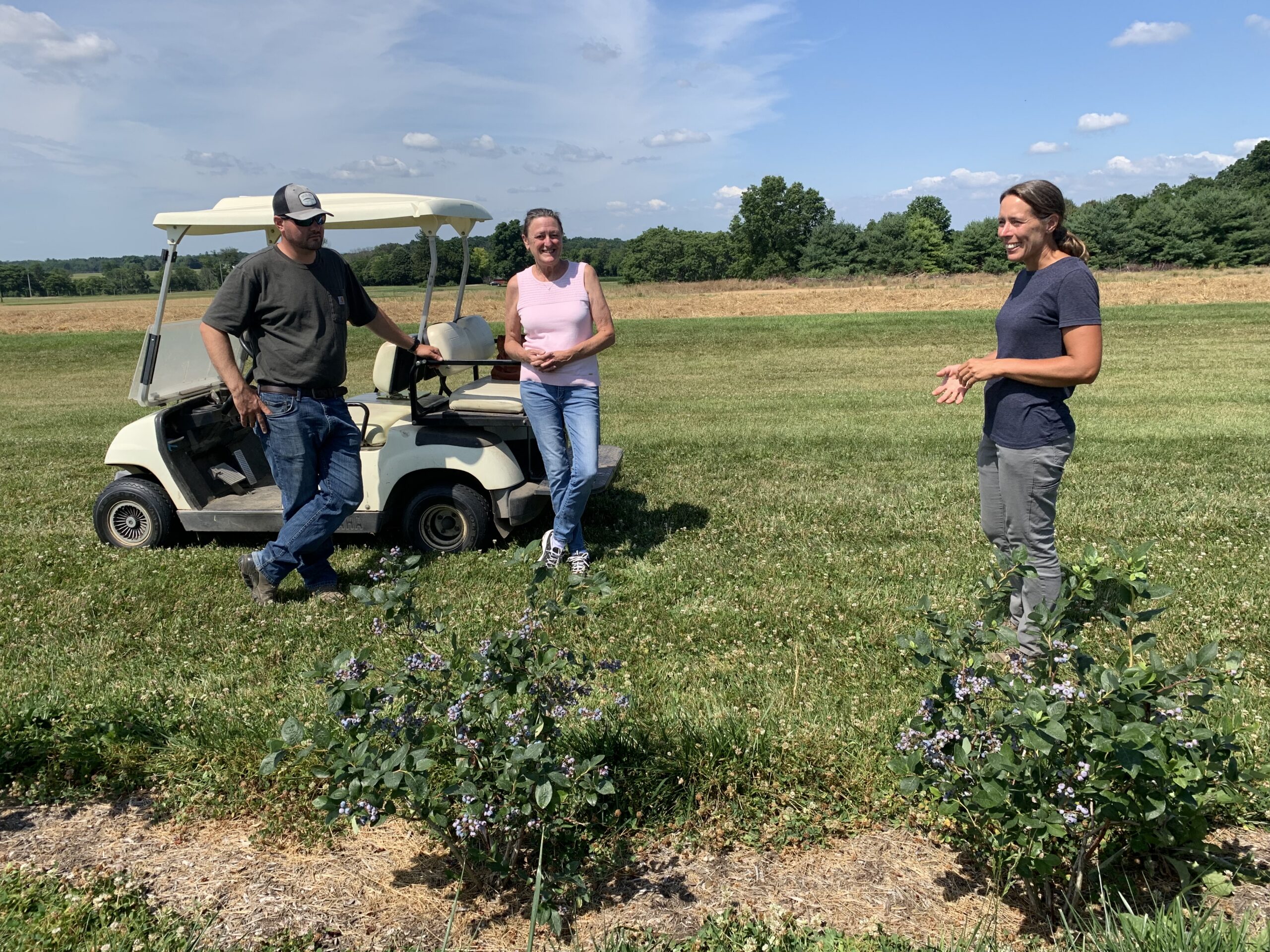
Marylee Ross has helped cultivate a thriving network of land-grant field researchers in IR-4’s Northeast Region.
Photo courtesy of the University of Maryland.
A curious and enthusiastic researcher, Ross thrived as she grew the research center and cultivated IR-4’s Northeast regional network. While Ross emphasizes the engaged community already present in her region, she has excelled as an organizer, making the necessary connections to support a robust IR-4 research community in the northeast. Beyond successful trials and research logistics, the professional culture that Ross has shaped is deeply caring, innovative, and responsive to growers’ needs.
“I see the challenges the growers face, and I really, truly want to help them with it, in a responsible way,” Ross says.
In 2015, during IR-4’s annual farm tour with EPA colleagues, Jerry Baron (IR-4 Executive Director emeritus) asked Marylee to “step into his office,” which happened to be (that day) the tailgate of a truck. He asked her if she would be interested in taking on the Regional Field Coordinator (RFC) role for IR-4’s Northeast Region. Ross accepted, not knowing exactly what the role would entail, but always willing to learn and give it her best.
“I really didn’t have much to go on when I took the RFC role…so it was kind of like hunting and pecking around, shooting in the dark, and developing a network…it worked out great,” says Ross. “It’s interesting…seeing everybody’s specialties and different skill sets and different crops that they really care about, and how it all comes together to create this ecosystem.”
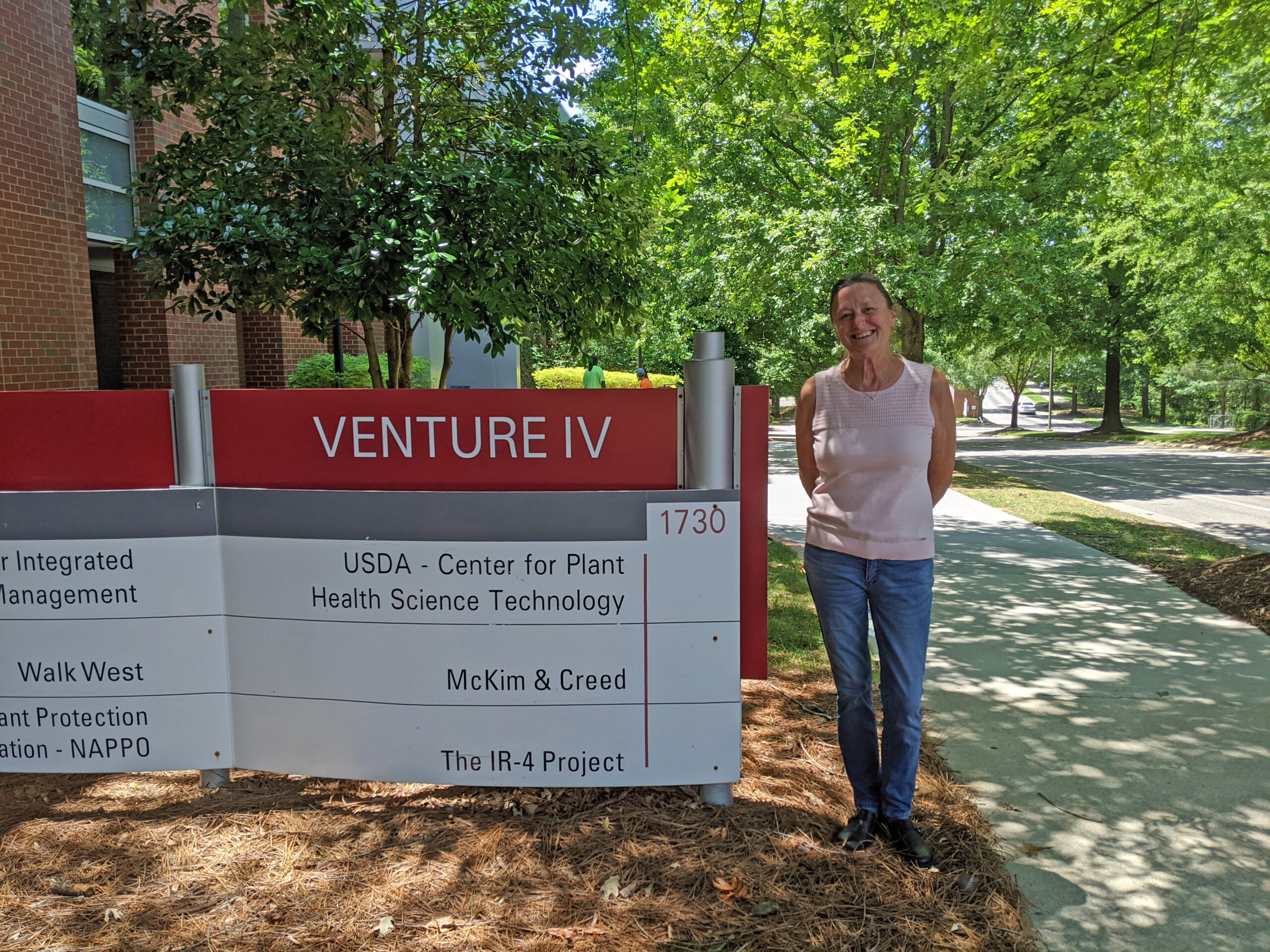
Marylee Ross, pictured outside IR-4’s NC State University Headquarters office, has served as Regional Field Coordinator for IR-4’s Northeast Region since 2015.
Ross has become a trusted and beloved leader in the Northeast Region, working closely with Regional Director Simon Zebelo, who is based at the University of Maryland Eastern Shore. Zebelo sees Ross not only as a colleague, but as a mentor and friend:
Marylee Ross has been a cornerstone of the IR-4 Project in the Northeast Region for decades. As Regional Director, I have had the privilege of working closely with her for the last 6 years and learning from her exceptional dedication, precision, and deep expertise in residue research and field operations. Marylee has not only been a trusted colleague but also a mentor and friend. Her professionalism, attention to detail, and unwavering commitment to supporting specialty crop agriculture have set a standard of excellence across the region. Beyond her remarkable technical contributions, she has always been generous with her time and guidance, inspiring and supporting those around her. Her impact on the program and on those who have had the opportunity to work with her will be lasting. Marylee’s legacy will continue to guide the IR-4 Project for years to come. She will be deeply missed, and I wish her all the best in her well-earned retirement.
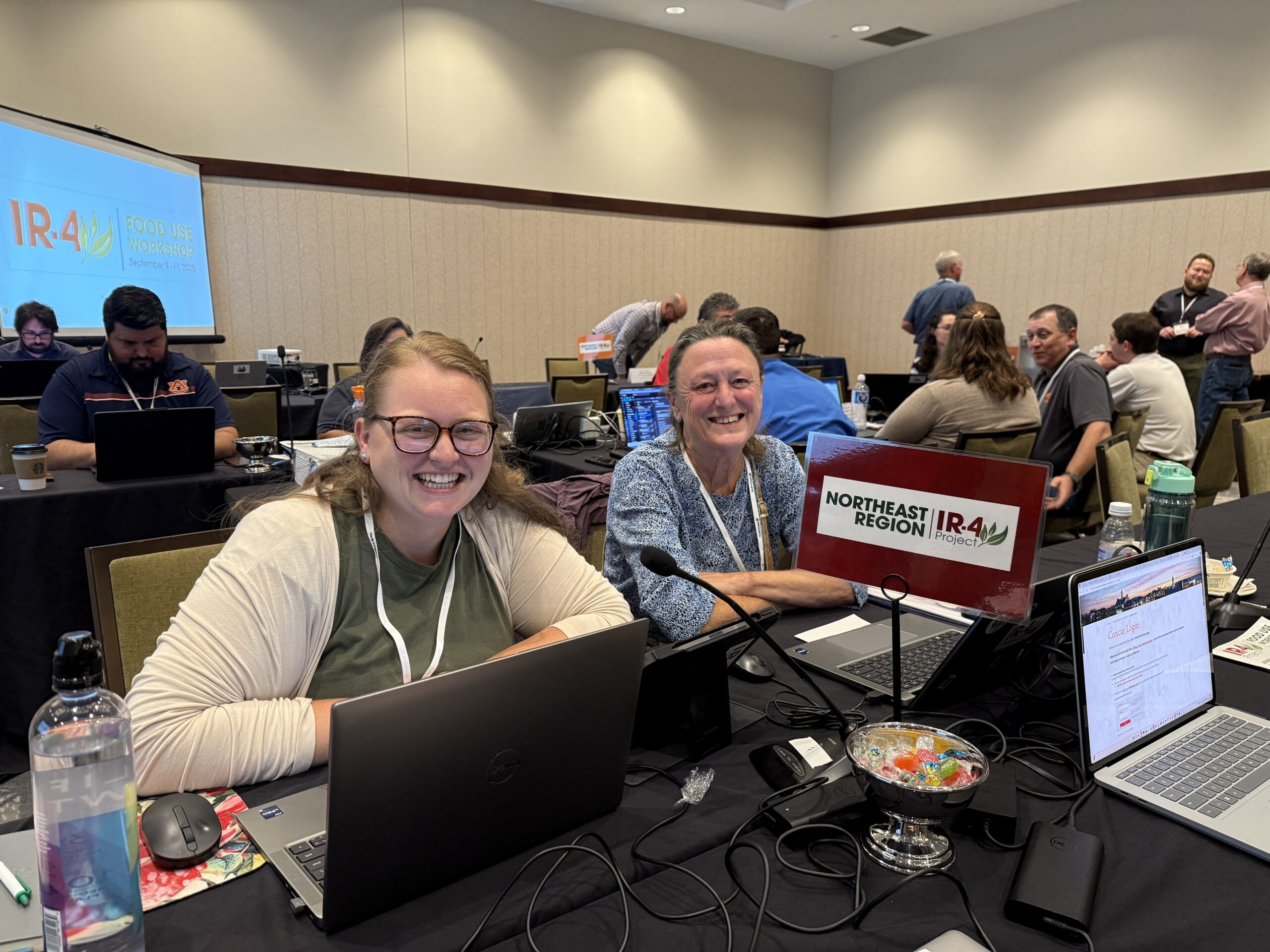
Marylee Ross and Megan James Hickman make a dynamic regional team, from research priority setting through each field season; pictured here at the 2025 Food Use Workshop.
Ross is known and loved as a mentor not only in her own region, but also to RFCs, regional leaders, and researchers learning their roles across the IR-4 community. A particularly meaningful mentorship experience for Ross has been working alongside Megan James Hickman. Hickman—now the assistant regional field coordinator—has been working with Ross since she was just 16 years old.
Earlier in her LESREC career, Ross often visited the James’ family farm and business, Shore Seed, for guidance on equipment and other field trial logistics. As Ross got to know the family, Hickman’s grandfather asked her about summer job opportunities for his granddaughter. Ross was happy to teach, and Hickman was eager to learn and help. The partnership stuck, and Hickman continued her work part-time at LESREC through her college career and beyond.
When Ross transitioned to the RFC role, it was the perfect opportunity to bring Hickman on full-time as her assistant. “We can work through anything together,” says Ross.
Ross has worked in tandem with Hickman over the past decade to teach her the ropes of field research coordination. Together, the two bring a thoughtful, grower-focused, and community-centric approach to every aspect of their work.
Working with Marylee has been an honor and privilege. She is the epitome of a supportive and kind mentor —I cannot imagine a better mentor and partner. She has taught me more than I could even attempt to quantify. Along with learning from her, we have learned a lot together along the way… and laughed a lot together along the way. No matter the situation that she is faced with, she is always going to handle it with kindness and respect. I believe that is why she has been so successful in growing the Northeast Region network. I am incredibly fortunate to have been able to work with Marylee for over a decade and will forever be grateful for her professional partnership and mentorship. But even beyond the working partnership, I will forever be grateful for her friendship and support.
Ross’s time with LESREC and IR-4 has been multifaceted and fulfilling, from her meaningful relationships with colleagues and collaborators to the daily opportunities to learn and grow. Ross reflects:
Every day is another education, and that’s what makes this pretty special. It’s just been an honor to work with the people that I’ve been able to work with over the years, and I realize that I’ve had a unique and very special job. It’s not like hardly anything else I can think of, being able to interact with farmers and their knowledge…and with researchers that are studying in their discipline, and everybody at Headquarters that’s trying to make it all work.
As Ross prepares for retirement, she is confident in the next generation to lead IR-4 skillfully and steward its mission with care. In this next chapter, Ross plans to focus her time and energy on the family she adores. As for her time with LESREC and IR-4, it’s not really goodbye—Ross hopes to help out with field work in future summers as time allows, and remain a mentor to her close-knit colleagues.
The IR-4 community wishes Marylee Ross a happy, healthy, and family-filled retirement. Your work on behalf of specialty crop growers has been nothing short of inspiring, and we extend our gratitude for the impact you have made on this program!
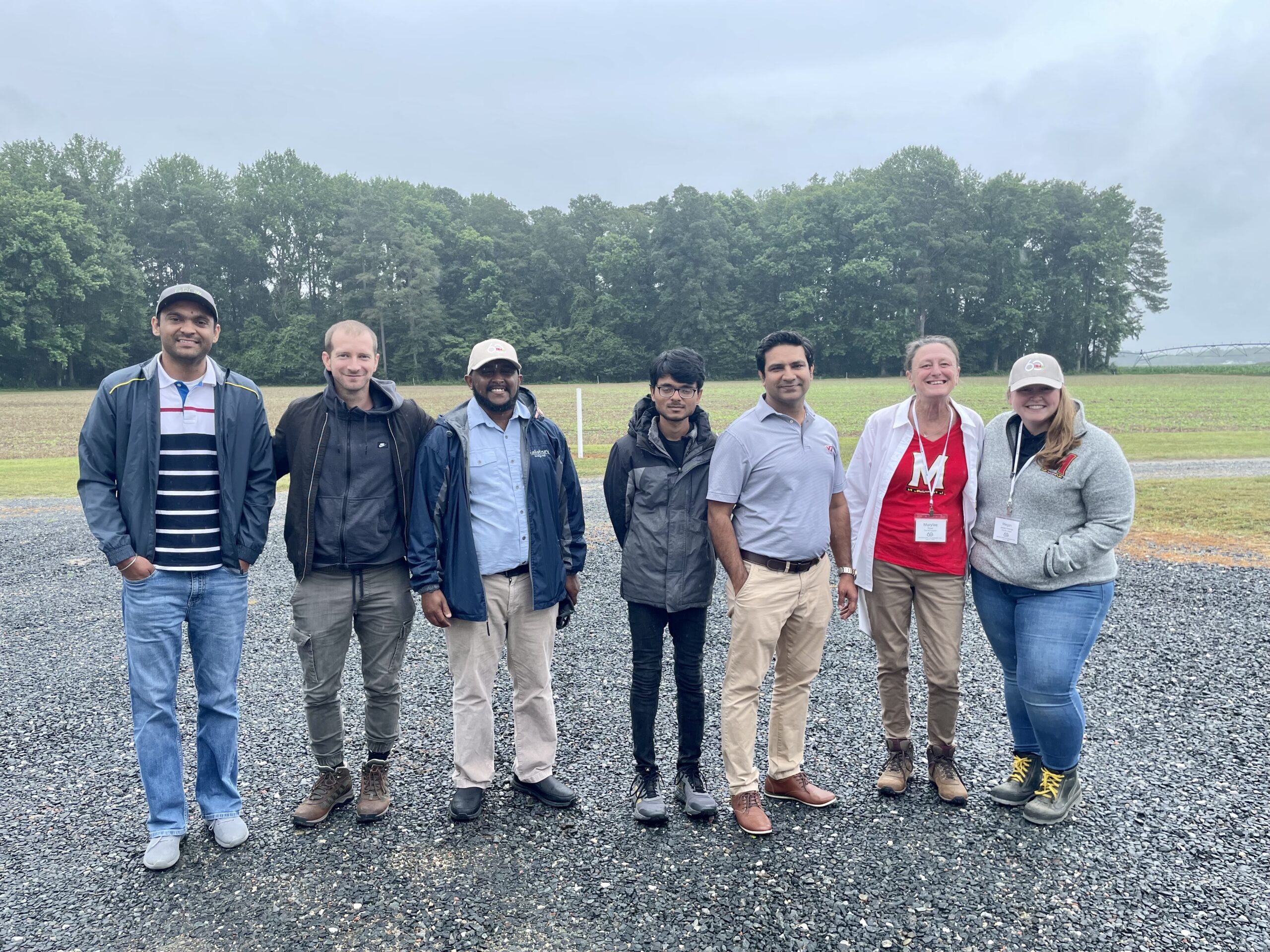
Set up for success under Ross’s heartfelt, grower-focused leadership, the Northeast Region team is well prepared to carry her legacy forward. Pictured at LESREC during the 2023 EPA Tour.