
Growers of a small crop with big challenges rely on IR-4 for pest-control tools
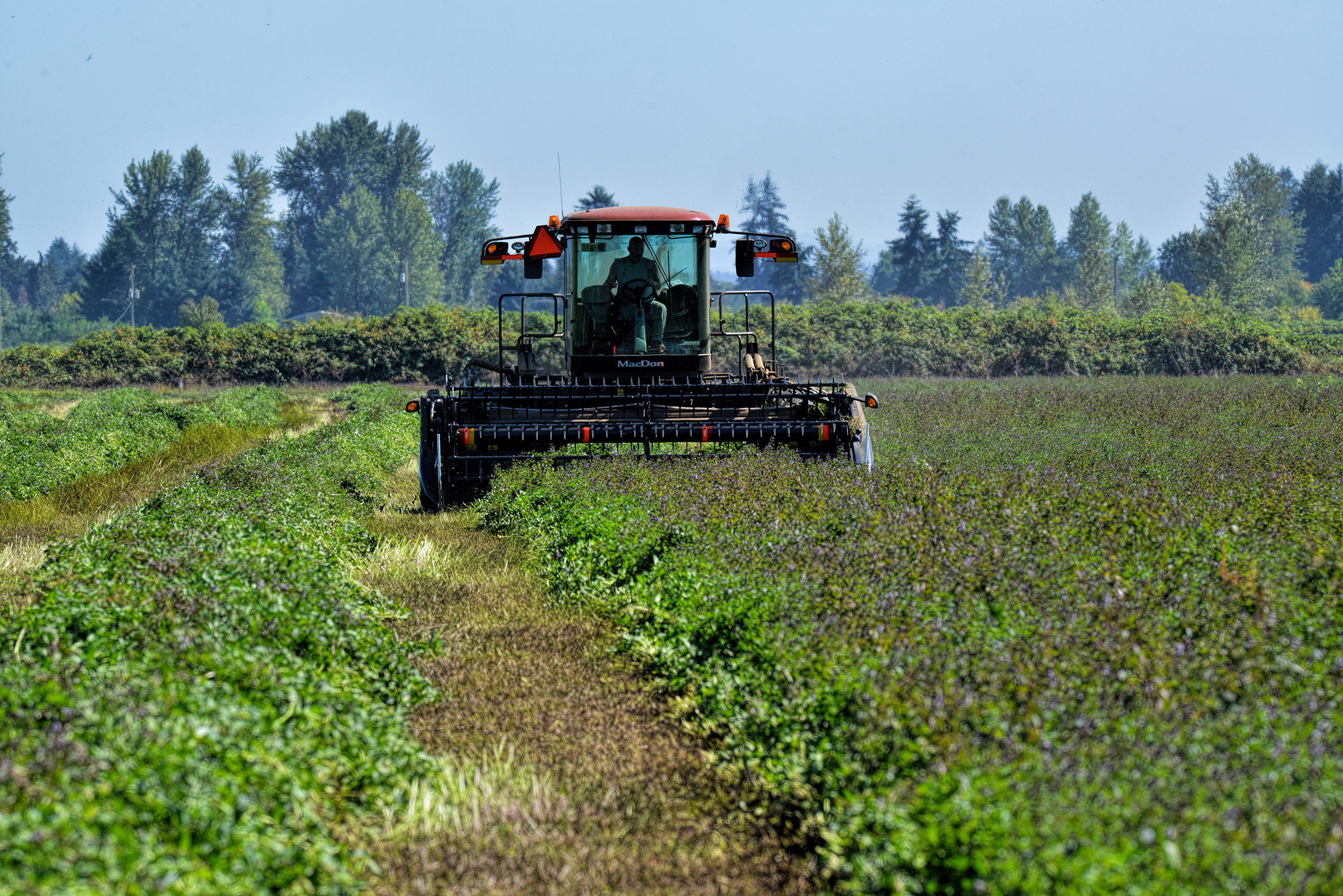
Mint growers face a host of pest challenges; IR-4 works to help growers access more tools to manage those pests. Image courtesy of MIRC.
Any gardener who has planted a mint plant in the ground has likely seen it take off running and never look back. Mint grows vigorously—usually too vigorously—in a garden bed. However, if you are a farmer growing mint for commercial production, it can be much more challenging.
Diseases such as Verticillium wilt can devastate the crop and render the ground unusable in the future. Insects like mites and root or stem borers can reduce yield and quality. Weeds can contaminate the mint oil, a product that needs to be pure to be salable. Mint is a popular component of many food products—including the fresh and dried herb as well as mint oil—and any pesticides used on the crop must meet U.S. Environmental Protection Agency (EPA) safety standards for environmental and human health.
Getting pesticides registered for use on a small crop like mint is an arduous task, since the acreage involved is too small to be worth the manufacturer’s investment in the required trials and data, and the fees involved. This is where IR-4 steps in, working with researchers and other stakeholders to develop application protocols, collect data on product efficacy and crop safety, and test residue levels to ensure they meet regulatory requirements. With minor crops like mint, doing this legwork can make all the difference in persuading a manufacturer to apply for a label use.
“Even in the heyday of mint production in the U.S., we had a little less than 80,000 acres,” says Steve Salisbury, Research and Regulatory Coordinator for the Mint Industry Research Council (MIRC) and a member of IR-4’s Commodity Liaison Committee. “And, right now, we have about 45,000 acres in production. When the manufacturer is developing a business plan, and we say, ‘We have 45,000 acres’, they say, ‘We have one county in Illinois with 45,000 acres of corn.’ So there’s no comparison. The support of IR-4 is absolutely critical for an industry like mint.”
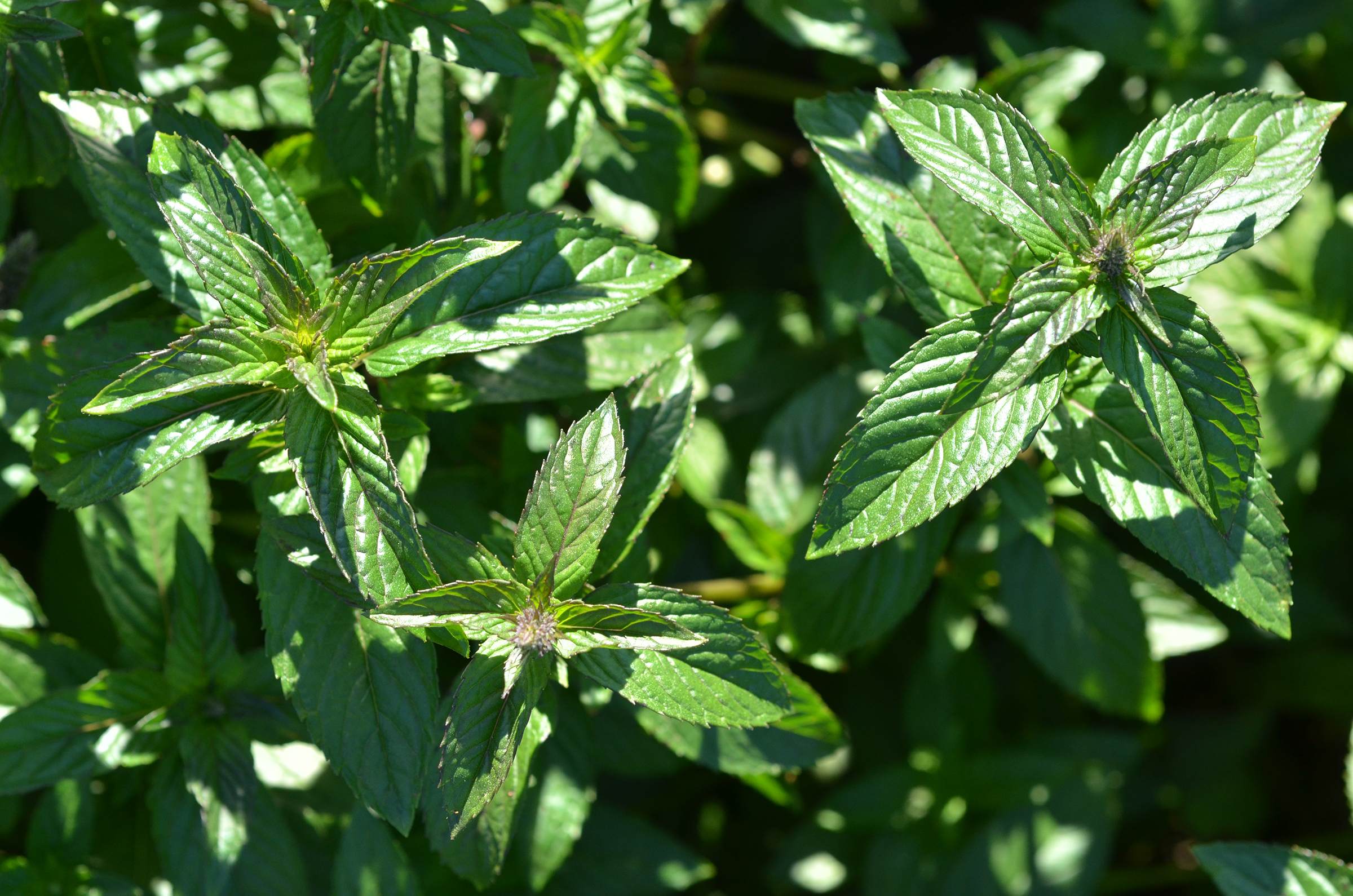
Small-acreage crops like mint face an uphill battle when it comes to registering pest management products, since manufacturers tend to focus efforts on major crops. Image courtesy of MIRC.
Mint Production Varies Across Climates
Mint is grown primarily in the Midwest and the far western parts of the U.S. Indiana, especially the northwest corner, has the most acreage in the Midwest, followed by Wisconsin and Michigan. The state of Washington leads mint production in the U.S., followed by Idaho, with Oregon and northern California also growing a significant amount.
“There’s still some sprinklings of production in places like Minnesota, Utah, Montana, northern Nevada and North and South Dakota,” Salisbury says. “Historically, mint production began in the early 1900s in Massachusetts. But, due to Verticillium wilt (Verticillium dahliae), eventually it moved to upstate New York and then to Ohio and Michigan. Eventually, the fields became infected there, and production continued to move west. Everybody in the traditional growing areas is continually searching for that good virgin ground that hasn’t been infected with Verticillium yet.”
Production practices differ based on the climate and soils. Northern areas such as Minnesota and Wisconsin only harvest once per season, while warmer areas can get two cuts or more. A good portion of Midwestern mint is grown on muck soils — marshland drained decades ago — which means higher organic matter and the ability to control the water level through drainage ditches. Mint grown in the West is on mineral soils and usually in drier conditions, requiring irrigation. Mint is a perennial plant that grows from crowns; in northern growing areas, the plants are plowed underground in the fall to protect the crowns during the winter.
While there are numerous types of mint, spearmint (Mentha spicata) and peppermint (Mentha piperita) are the primary commercial species. The type of mint predominantly grown in a given area varies by region. Washington state leads the nation in total mint production, which includes both peppermint and spearmint. Washington leads the nation in spearmint, producing about 70% of U.S. spearmint oil in 2025 (compared to about 27% of U.S. peppermint oil), while other regions are more focused on peppermint oil, based on USDA National Agricultural Statistics Service’s 2025 numbers.
“Spearmint oil makes up only a small fraction of the mint oil market [in our region],” says Dan Heider, Field Research Director for IR-4’s North Central Region. “Peppermint is currently our primary crop grown, and consists of just three cultivars: ‘Black Mitcham’ and two improved varieties of ‘Black Mitcham.’”
Harvest and Distillation: A Fragrant Process
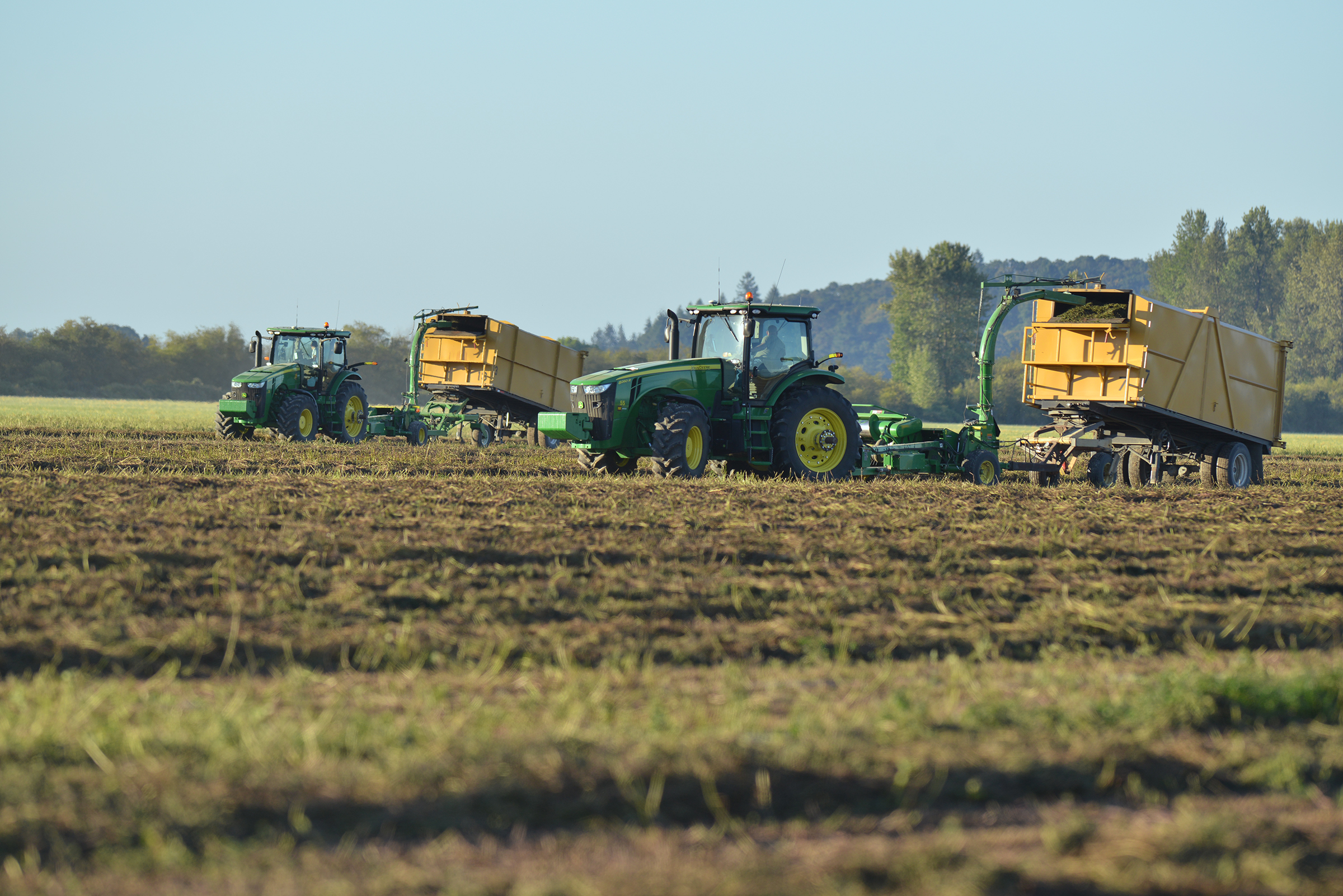
Keeping mint crops weed-free is important for viable harvests as weeds can contaminate mint oil.
Image courtesy of MIRC.
A small percentage of mint is harvested and dried as an herb, but most mint is processed into oil for use in fragrance and food flavor. Salisbury, who grew up in western Oregon, remembers his father processing mint through a distillery and the intense smell of mint in the still. “On warm days in the field before swathing the mint, you can turn the leaf over and see oil droplets hanging on the underside of the leaf,” he says.
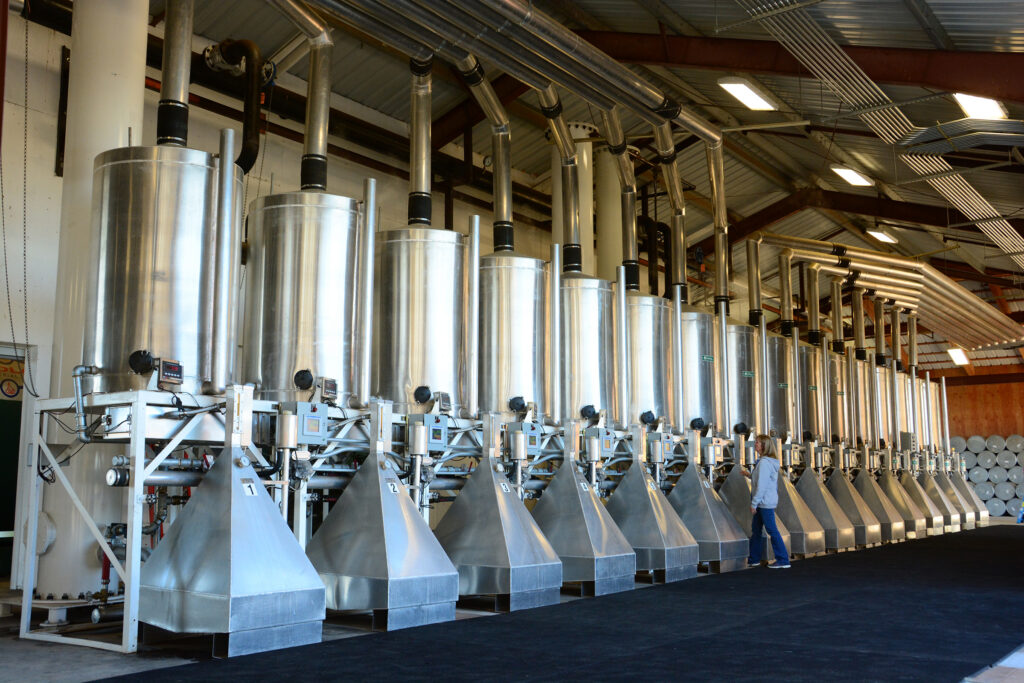
When the climate and moisture conditions in the plant are right, the plants are cut and left to dry in the field. Then it is picked up and chopped and blown into a specially designed mint tub. The tub is taken to the still, and a steam line is connected to the bottom of the tub and an exhaust line at the top. The steam travels through perforated pipes in the floor of the tub. As the steam rises through the “hay,” it strips the oil from the mint, which is vented upward through the exhaust line. The oil and steam cool as it travels through the condenser and drops into a separating can as oil and water. The oil is lighter, so it floats on top. As the can fills, the oil decants, pushing off the top of the water into a collection can.
“It’s a lot like distilling alcohol,” Salisbury says. “It’s fascinating. It’s a beautiful-smelling crop to work with. If you have plugged sinuses, standing near the oil condenser where it drops into the separating can will clear them in a hurry.”
 |
 |
Most mint is processed into oil for use in fragrance and food flavor. Images courtesy of MIRC.
Developing Solutions for Weed Control
Because the quality of the oil determines the price, and even if it is saleable, keeping weed contaminants out is of primary importance.
“If weeds get into the distillation process, they can impart off flavors, which can result in a lower buyout—or even no sale—for that oil,” says Heider. “Weed competition can cause lost yield, as well, like in other crops. But there’s a big concern about a reduction in quality as well.”
IR-4 has helped develop a toolbox of about 10 active ingredients to aid weed control in mint fields, a number Heider says grew from about two products labeled in the mid-1990s. “There’s been a lot of progress on weed control, which is really helpful,” he says. Still, challenges remain.
Heider says crabgrass is an aggressive weed in muck soils, and while it has historically been controlled by ACC inhibitors, a lot of crabgrass has become resistant to them, and it’s become troublesome, especially late in the season. More recently, like so many farmers, mint growers have experienced an increase in pigweeds like waterhemp and Palmer amaranth.
To combat these weeds, IR-4 recently facilitated the approval of saflufenacil for mint. Saflufenacil is considered a low risk for volatility and drift, and an improvement over paraquat. It provides an additional tool for controlling hard-to-manage weeds and, when used with cultural practices, reduces the likelihood of herbicide resistance.
Controlling broadleaf weeds in a broadleaf crop has its challenges because the herbicide doesn’t discriminate. It must be applied after the weeds emerge, but before the mint emerges, which means there is an extremely narrow window for it to be applied over the crop. It doesn’t work for all growing areas, although some growers are now using it as a burndown after the mint plants have gone dormant.
“Saflufenacil, like many of the herbicides we use, had been around for many years before being investigated for mint,” Heider says. “The MIRC pointed us in this direction, because they look at the products and say, ‘This one is really needed for our growers.’ IR-4 can only put through so many projects in a year, so in the case of mint, the MIRC prioritizes which products they hope we will support. They also help to fund a lot of the efficacy work on the front end to make sure the product works and that it has crop safety.”
Salflufenacil was approved for mint in 2025 after five years of work by IR-4 and MIRC, and growers were quick to adopt it into their weed control programs.
Following work conducted jointly with the Canadian Pest Management Centre, IR-4 also facilitated the February 2026 approval of pyridate in collaboration with MIRC, which gives growers an additional tool for managing weeds in mint moving forward. Salisbury notes that this success is “a big deal for mint—we really appreciate IR-4 getting this done.”
IR-4 Ushers Important Tools Into Growers’ Insect Management Portfolios
Mint growers have a new tool for controlling nematodes after IR-4 developed protocols and tested residue levels for fluopyram, a nematicide and fungicide. With only one current chemical option available for nematode control in mint, and no cultural or biological controls, the approval of fluopyram for mint in 2023 is a welcome new mode of action for growers.
Mites are a significant problem in mints, and Salisbury says IR-4 has been instrumental in getting some additional miticides approved for mint.
“We are seeing more and more of the older materials losing their efficacy due to mite resistance,” Salisbury says. “Thanks to IR-4, we have options we can turn to. In fact, I think every miticide on our list became available to us through IR-4.”
Fenpyroximate is a miticide that is now in most mint growers’ pest control programs. “This was a significant tool for registration, says Russell Groves, Professor and Department Chair at the University of Wisconsin Department of Entomology. “Mint bud mite became an issue in the late 1990s and into the 2000s, and this registration became very valuable. Producers now use support tools to time the application [of fenpyroximate] with the population biology of the mite and they have good success.”
An especially notable active ingredient for which IR-4 facilitated registration for mint is chlorantraniliprole, which provides effective control for mint root borer. The use was approved in 2016. One benefit of chlorantraniliprole is that it is a softer chemistry for the environment because it is more targeted toward specific pests; it can be used as a reduced-risk, direct replacement for chlorpyrifos. Heider says that because IR-4 continues to pursue registrations on newer products, it allows mint growers to keep an environmentally conscious aspect to their pest management programs.
Another example of this is the 2024 registration of cyantraniliprole for use on mint root borer. Salisbury says data show it is a bit more effective than chlorantraniliprole, and will provide a new tool to rotate into a control program, helping to delay resistance to both products. This is another reduced-risk, improved option to replace chlorpyrifos.
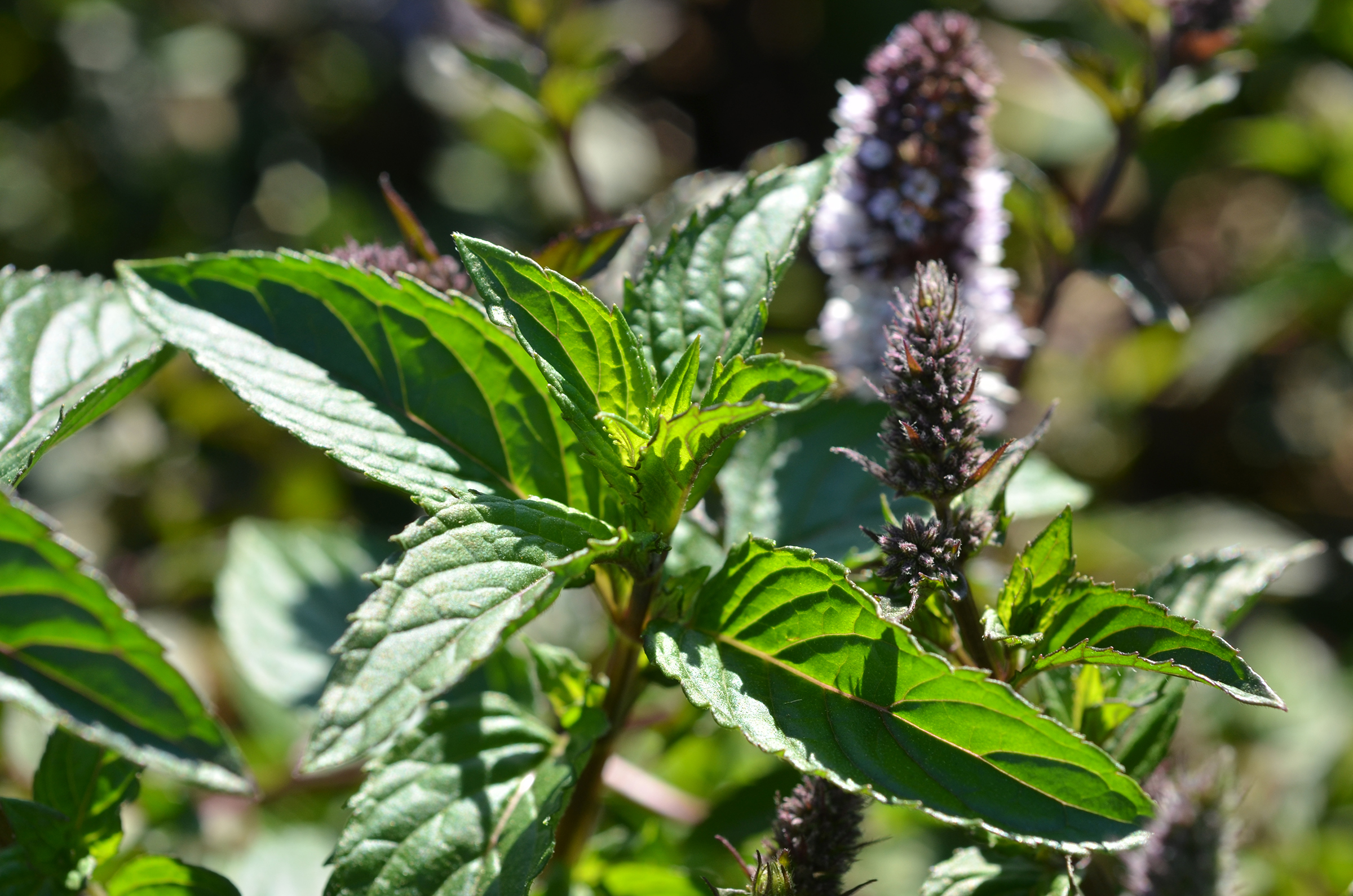
U.S. growers take pride in the high quality and consistency of their crops; still, it’s hard to compete with cheaper crops grown overseas, so educating consumers is a key industry initiative. Image courtesy of MIRC.
Working Toward the Future
Competition from cheaper mint oil from overseas (primarily India) has made the market soft for North American growers. It’s one of the main reasons for the reduction of North American mint acreage. Heider says the foreign-produced oil are not of the same quality and consistency as what is grown in the U.S., so educating consumers is a key industry initiative.
“The unfortunate part is most people in general are not really able to discern between U.S.-grown mint and lesser-quality mint,” he says. “I’m guessing the vast majority are not even aware mint oil is produced from a plant and not made synthetically. The mint industry is working with companies that produce mint products—toothpaste, candies, etc.—to add the U.S.-grown, higher-quality message to their packaging.”
Verticillium wilt remains a perpetual challenge, despite efforts to breed resistant cultivars and develop effective treatments. Salisbury says it’s “the disease of the century for mint.”
Because the mint industry is not comfortable with transgenic breeding techniques, the MIRC has made significant investments into traditional breeding, attempting to develop a Verticillium-resistant cultivar. Marker-assisted technology—reviewing the genotypes of plants and searching for genes that indicate potential for resistance—helps speed the process, but mint, especially the “Black Mitcham’ cultivar that dominates production, is not your normal plant. Peppermint is a sterile plant that is propagated by cloning rather than by seed. What’s more, ‘Black Mitcham’ has three ancestral parents, and it is a hexaploid, meaning it has six times the chromosomes of a normal plant. Traditional breeding, where a wild mint that is resistant to Verticillium is crossed with ‘Black Mitcham,’ doesn’t work.
“I tell people Black Mitcham’ is an evolutionary act of God that was created over many, many years, Salisbury says. “It is a genetic phenomenon. But it has the scent, flavor, and molecular composition that mint oil buyers and their customers want.”
There is a project currently underway with IR-4 at the request of MIRC that is testing azoxystrobin and benzovindiflupyr, which has shown some efficacy against Verticillium on mint. “If it does well, that would be great,” Sailsbury says. “We’ll evaluate the treatments and see if there seems to be potential.”
Salisbury says the relationship the mint industry has with IR-4 is critical for its success. “We have a long, positive history of support with IR-4,” he says. “We pound the table at Capitol Hill and tell all our growers how important this program is. We would not have anywhere remotely close to the portfolio of products to defend our crop without IR-4—not even close. We feel very fortunate to have the support of this program.”
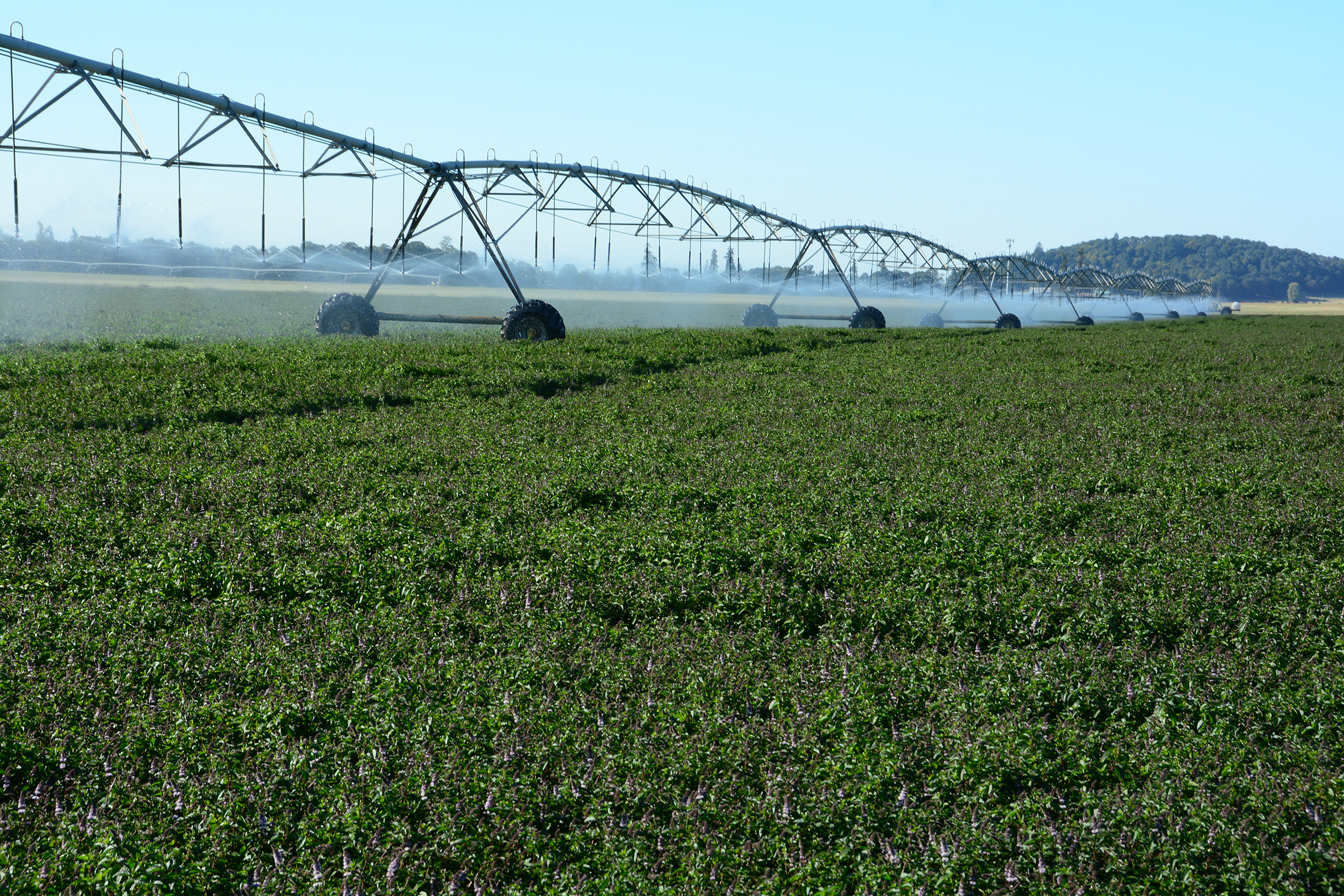
Supporting small-scale specialty crop industries like mint is at the heart of IR-4’s grower-focused mission.
Image courtesy of MIRC.
Submitting Project Requests to IR-4
Stakeholders are encouraged to submit Project Clearance Requests that explore new options to support mint production. Sign up for the newsletter to stay informed about IR-4’s research, events, submission deadlines, and more. Questions may be directed to IR-4 Headquarters at ir-4_project@ncsu.edu.